
Wrenching Turns
The blue-collar future of the AI world

AI giveth and AI taketh away. Artificial intelligence is changing the world faster than many of us thought possible. Driverless trucks are hauling food across Texas. At the moment, these trucks are required to have cabs with steering wheels. They look like any semi-trailer you’ve ever seen, minus a man at the wheel. But soon these trucks will hit the road without steering wheels or cabs. Instead, we will see long boxes with tires, lights, and antennae, minding their own business, and ours (Fung).
Equally surprising is the announcement by Waymo, the driverless car company, that it now provides more than half a million trips, every week, to riders in Arizona, California, Florida, Georgia, and Texas, in ten cities in all (Deighton). Waymo has an effective ad in which a well-dressed woman taps her phone. Then we see an empty white car on its way to her. We never see them meet. She summons and the vehicle responds, like a well-trained pet.
Everything that gets to your home or store is carried by a truck. All those goods will soon depart from and arrive at delivery points in wheeled boxes that bristle with mirrors and sensors. They will process down interstate highways just as semi-trailers do now but, no doubt, without the aggression one sometimes sees on the road. Around them will be other well-behaved, if odd-looking, AVs (autonomous vehicles), some carrying passengers. Machines will drive. People will be driven.
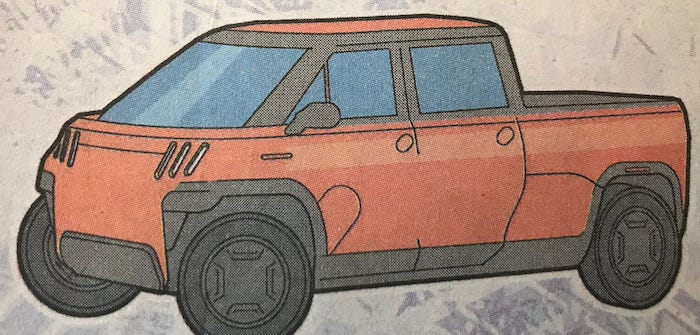
Many think we will be better off. Waymo claims that its cars are ten times safer than those driven by people. The company boasts that is has created a driver that never blinks. The pitch isn’t that cars are better than people, who need to blink. The pitch is that people are too important to be at the risk of an accident caused by driver inattention.
We owe these massive changes to Artificial Intelligence. If you ask AI what AI does, it tells you that it creates jobs in “the development and maintenance of the technology itself, the management of AI systems, and specialized roles across industries integrating AI into their workflows.” Trucks and cars among the industries now “integrating AI into their workflows.”
But what about workers and their workflows? AI is changing hiring. What used to be entry-level work in many businesses and industries is now handled by AI and its robots. That means that new employees are held to higher expectations. Basic skills don’t open as many doors as they used to do. Entry-level jobs now require technical knowledge and experience. In an age of smart phones and smart doorbells, we expect smarter people. This seems to point to a bright future for the AI-literate.
Some think that even smarter people don’t necessarily have secure futures, however. Recent hires are finding out. Graduates with degrees in computer science were once valued coders. Since AI codes faster and better than they do, new grads in those fields are no longer in demand. AI also sidelines software engineers (Putzier) and MBAs (Smith), many of their functions now usurped by machines. Graduate programs in business are presumably retooling as they see this market-driven shrinkage reshaping their futures.
Oracle made news recently when it announced that it had reduced its workforce by 21,000 jobs. The company now has 141,000 full-time employees, down from 162,000 a year ago. Oracle expects to spend $70 billion on its AI build-out this fiscal year, following $55.7 billion the year before.
All is not lost. Some believe that AI-savvy new hires can get ahead fast if they can show their companies ways to save money and improve their products. AI has had a leveling effect on job performance. Skills acquired outside the workplace give new hires advantages their experienced colleagues might not have. AI’s impact on the workforce has been compared to the effects of Excel (introduced in 1992), email (1995), and Google (2022; see Javor). Except for COVID in 2020-21, it’s been almost a quarter century since the workplace has been, as we now like to say, disrupted like this.
What is happening at the other end of the labor hierarchy? What is the status of the manual laborer, whether skilled or unskilled? AI might well lead to a world in which many jobs for blue-collar workers have disappeared—truck driving, loading, and unloading, for example. Robots already move flats loaded with goods around warehouses. Anybody can see what is gained. Robots don’t get tired doing the same thing for hours at a time. They either replace workers or free workers for more difficult tasks.
Who is thinking about what is lost in these developments?
One is a member of a Teamsters Local in Illinois. In a letter to The Wall Street Journal, he wondered about changes in the relationships between customers and drivers. What happens when there is no driver for the customer to get to know? He is right that these “lasting relationships” are disappearing. That said, for most of us this is not a great change. How often do you see the people who deliver your Amazon packages, much less “relate” to the drivers?
The term “teamster” was spawned in the slower and more personal era of the horse-drawn era. Truck drivers replaced horse drivers but kept their name. Driverless trucks will dispense with drivers but will still be trucks, a word that comes from Greek trokhos meaning “wheel.”
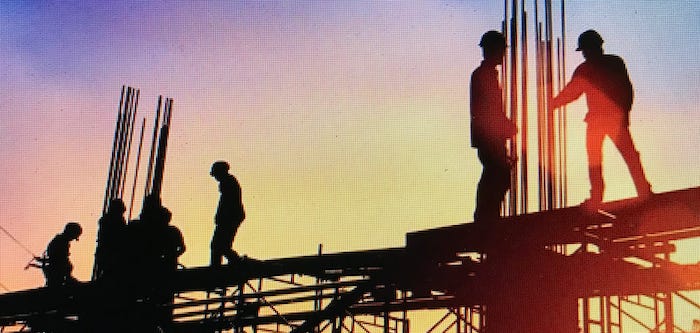
What about other skilled laborers, such as construction workers? Will AI create a technology that will build office towers of 50 or 100 stories? Or what about the above-ground power grid? Who will climb those towers (as long as we have them) and make repairs? In many of those fields today, up to 90% of blue-collar workers are men. I don’t think their jobs will be disappearing soon.
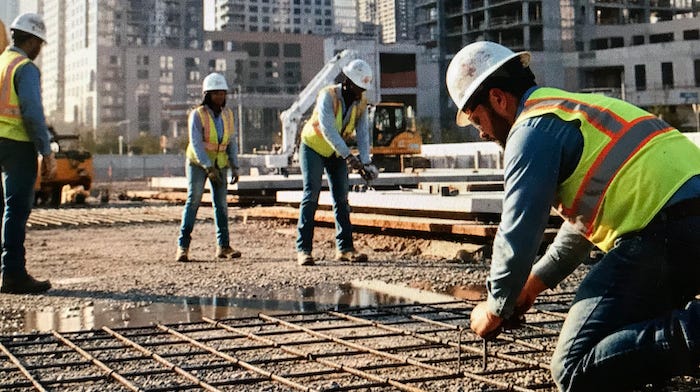
When I began reading about the impact of AI, I assumed it would have the greatest effect on blue-color men, those who perform easily mechanized tasks. I was wrong. In fact, the market for their jobs seems to be growing. Positioned next to a recent Wall Street Journal article about driverless trucks was an article about the pressing need for people who work in what is usually known as “the trades.” Where is that call coming from?
From Meta, for one. “It’s time to pick up a wrench,” says Meta (formerly Facebook, rebranded five years ago), which is sponsoring a new “Workforce Academy.” The Journal reports that Meta bosses have not been able to find enough skilled trade workers to build their proliferating data centers. These are not ordinary construction projects. A data center under construction in Louisiana is “so large that it would cover a significant part of Manhattan” (Bobrowsky and Chen). Using Manhattan as a measure, let’s see how big that data center might be.
Manhattan is roughly 23 square miles. A significant part of the island might be roughly half that, or eleven square miles. Central Park is 1.3 square miles. A data center that would cover “a significant part of Manhattan” would, let’s say, be four times the size of Central Park, which is 2.5 miles long and half a mile wide. At four times its size—that is, five miles long and a mile wide—the park would cover a “significant” part of Manhattan.
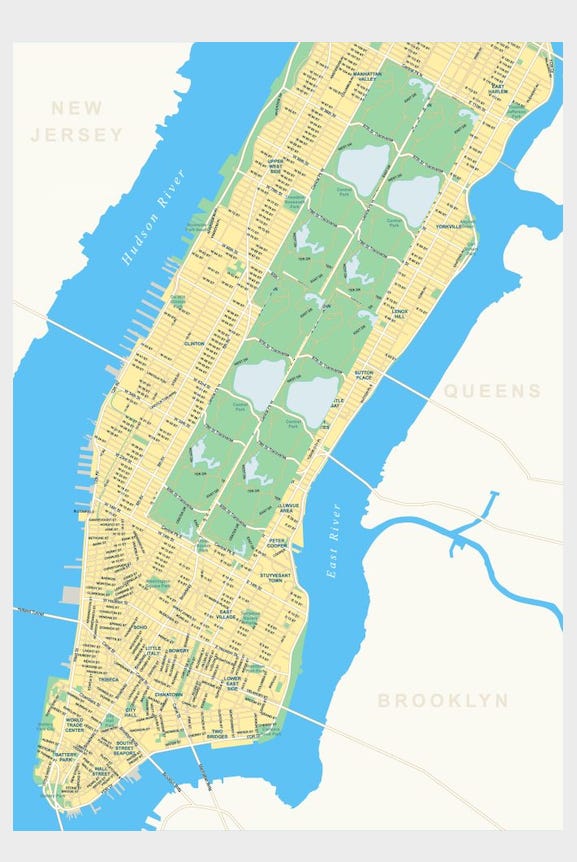
Just imagine: Central Park x 4
A data center of that size would be larger than any structure now standing. The largest structure on Earth today is a complex known as Prora, which was built as a resort the Nazis. It is located on the island of Rügen, on the northeast tip of Germany. Prora is less than three miles long and comprises eight relatively narrow buildings (see “Prora”). Compared to Prora, a data center of the dimensions shown above would, I think you will agree, be astonishing.

Consider the size of the workforce needed to build an enormous data center, the heavy equipment needed, and the energy and water the project would require. Comparable forces have been marshaled to build Amazon’s distribution centers. Some of them are about four million square feet, roughly 70 football fields.
Data centers consume over four percent of the electricity generated in the United States, and these demands will grow. These facilities dwarf the building that served as the architectural center of the 1893 World’s Columbian Exposition in Chicago. The Manufactures and Liberal Arts Building was 1.3 million square feet, or 30 acres, about 23 football fields (Senik, p. 219). It could seat 300,000 people. The Narendra Modi Stadium in Ahmedabad, India, said to be the world’s largest, seats 132,000, less than half of that (but with better sight lines).

The Manufactures and Liberal Arts Building
Small cities have to be built to house the workers these wonders of the modern world require. In Wyoming a backlash has developed against a plan to build housing for up to 5,600 workers needed for a project. The proposed housing complex for these workers would be “larger than 84 of Wyoming’s incorporated cities” (Barrett). The locals worry as much about the growing population as they do about seeing open land vanish.
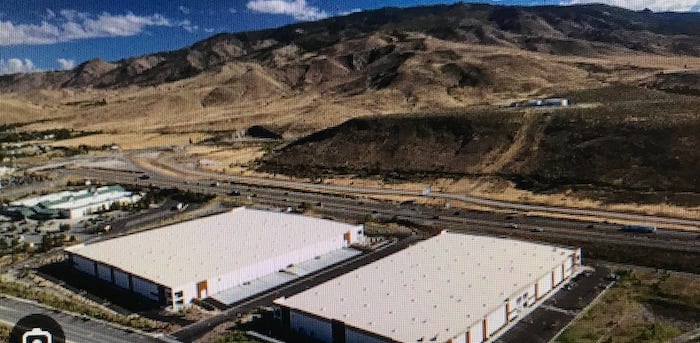
As AI companies scout the land for data center space, many such complexes will be required. New factories in Europe are creating “boomtowns” with as many as 14,000 employees, changing the face of France, Spain, and other countries. Boomtowns in the U.S. will be numerous.
Although they are a disturbing prospect for many people, and for many reasons, these developments are a boon to blue-collar workers, including teamsters, then and now. A years-long downturn in freight hauling has ended. Demand for trucked good has expanded and freight prices have risen. It is a big business. One nation-wide trucking company, headquartered in Virginia employs, 11,000 drivers to handle a fleet of 10,500 trucks (Berger and Young). That’s one company.
Again we confront the phenomenon of scale. AI will no doubt change how some of the freight business is executed, but if one company now has that many trucks and drivers, it could be some time before driverless trucks outnumber those with drivers. The depots to and from which they travel will be built (or existing depos reconfigured) by workers, and probably most of them will be men.
Homes have long been built near workplaces that employ thousands. Think of mill and mining towns. Those communities were seldom regarded as salubrious or, from the workers’ point of view, inexpensive. Most of us think about these communities only when disaster calls attention to them. Nearly 600 men died in explosions in mines between 1940 and 1968. Fatality numbers in earlier periods were, not unexpectedly, higher.
The AI-building boom will be different, more enlightened, and more environment-sensitive. But the new building boom resembles old booms in some ways. The workers will be blue-collar, most of them men willing to live in work-based settlements without their families. The centers will be assembled from wood and steel and concrete, all of it arriving in trucks. Some trucks will be driverless, but their cargoes will be assembled by human hands. Machines can assemble parts, but machines alone cannot assemble enormous buildings from those parts.
Memphis-based AZO, a company that provides “Automated Bulk Ingredient Handling,” has listed the factors that limit automation, ranging from safety to unpredictability and intuition. The latter two especially important in human effort. AZO’s website notes that “certain tasks, particularly those involving variable, complex decision-making or intricate physical handling, remain beyond the reach of current automation technologies.” Safety and regulatory demands “continue to play a significant role in determining where automation is applicable” (see AZO).
AZO holds out for the possibility of automation technologies that can perform tasks now beyond automation’s reach. My guess is that “complex decision-making” will be conquered before “intricate physical handling” becomes automated. “Intricate handling” certainly figures into construction work, but only after much physical handling of a tougher sort has gone on. I don’t see machines doing what construction workers do, or doing what tower climbers or tunnel workers do. I think Meta has it right: “It’s time to pick up a wrench.” As automation gets smarter, workers have to exploit human advantages, including presence, responsiveness, intuition schooled by trial and error, and tools in strong hands.
June 2026
Sources
AZO. https://www.azo-inc.com/blog/limits-of-automation. Seen June 29, 2026.
Barrett, Joe. “Data Centers Meet ‘Man Camp’ Backlash In Pastoral Wyoming.” The Wall Street Journal, June 10, 2026. A1.
Berger, Paul, and Liz Young. “Four-Year U.S. Trucking Slump Is Over at Last.” The Wall Street Journal, June 11, 2026. B1-2 .
Bobrowsky, Meghan, and Te-Ping Chen, “Meta Launches Data Center ‘Workforce Academy.’” The Wall Street Journal, June 6, 2026. B1.
Deighton, Katie. “Waymo Sets First National TV Ads.” The Wall Street Journal, June 12, 2026. B3.
Department of Labor. “Historical Data on Mine Disasters in the United States.” https:// arlweb.msha.gov/MSHAINFO/FactSheets/MSHAFCT8.htm. Seen July 1, 2026.
Fryer, Roland. “Why Teenagers Stopped Working in the Summer.” The Wall Street Journal, June 10, 2026. A17.
Fung, Esther. “Driverless Trucks Are Here, Hauling Doritos.” The Wall Street Journal, June 6, 2026. B1.
Javor, Andrea. “AI Is a Boon to Ambitious Recent Grads.” The Wall Street Journal, June 22, 2026. A13.
Llobet, Nuria. “The Limits of Automation: A Conversation with Jeff Gaines.” AZO. https://www.azo-inc.com/. Aug 6, 2024. Seen June 29, 2026.
Lott, Jeremy. “Will America Keep on Trucking?” The Washington Examiner. June 3, 2026. 43-44.
Prora (resort in Germany). https://en.wikipedia.org/wiki/Prora. Seen June 25, 2026.
Putzier, Konrad. “Software Engineers Contend With AI.” The Wall Street Journal, June 15, 2026. B3.
Rasmussen, Sune Engel. “Boomtowns Spark Division in Europe.” The Wall Street Journal, June 15, 2026. A10.
Senik, Troy. A Man of Iron: The Turbulent Life and Improbable Presidency of Grover Cleveland. New York: Simon and Schuster, 2022.
Smith, Roy A. “Demand and Pay for M.B.A.s Fall.” The Wall Street Journal, June 26, 2026. B1-2.
Vipers, Gareth, and Fabiana Negri Ochoa. “Oracle Shed 21,000 Jobs Last Year As It Sharpens Its Focus on AI.” The Wall Street Journal, June 24, 2026. B24.
Interesting summation, Allen. Thanks. I subscribe to a couple of interesting critics of AI who point out often that the tech is way overhyped. When it comes to writing code, for example, sure, AI can write code, but it makes errors, and then a coder has to go in and find the errors in code he never wrote, which leads to less efficiency rather than more. There will no doubt be a period of adjustment as companies figure out what works and what doesn't. I think we'll need coders for the foreseeable future. What AI is good for in terms of coding is quick modelling by non-professionals to sell new apps and give coders a strong sense of what a client is asking for. There are plenty of other examples of AI being useful, but not quite as useful or reliable as advertised. I would also challenge the notion that robots don't get tired. There's a lot of sleight of hand where AI is concerned. For instance, it mimics intelligence without understanding, and many are fooled into believing that AI is self-reflexive or has an idea what the world is.
Fascinating read Allen. So much we don't know about how all of this is going to play out. Quite a bit of this was new to me, so thanks for that. Waymo brought a chuckle.