
Charismatic Queens
Three women who eclipsed their famous husbands

King Charles III, John Fitzgerald Kennedy, and Grover Cleveland married women with charisma and ambition. The women could, and did, sometimes outshine them. When Diana, Princess of Wales; Jacqueline Bouvier Kennedy; and Francis Folsom Cleveland appeared with their husbands, there were microphones for the men and cameras for the women. What stories do the pictures of these three women tell?
Cleveland (1837-1908) was a bachelor when he was inaugurated in 1885. He married Francis Folsom (1864-1947) a year later, the only president to have been wed in the White House. In his biography of Cleveland, Troy Senik describes Folsom as “young, big-hearted, and beautiful.” She was the youngest First Lady in American history. The public adored her, and when the couple appeared together, she got most of the applause (Senik, pp. 160-61).
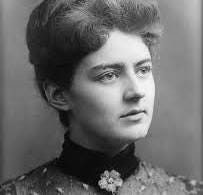
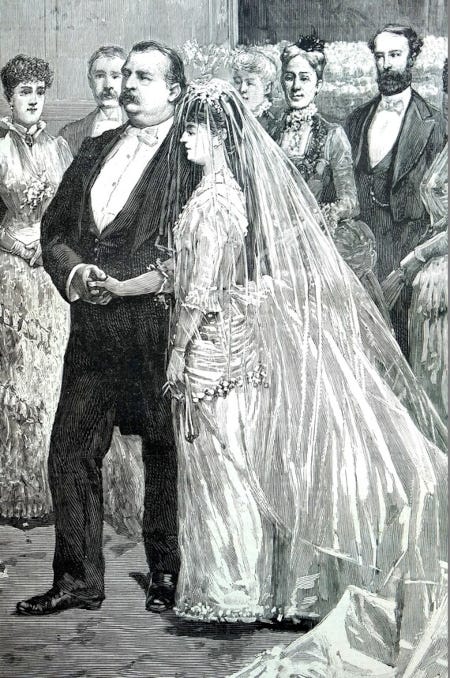
The daughter of Oscar Folsom, who was Cleveland’s former law partner and best friend, Francis was 21 and the president was 49 when they were married. No photographs survive from this 1886 event, held in the Blue Room of the White House, but there are sketches. He had known her since she was 12 years old. Her mother had visited the Cleveland White House frequently, and it was she who was expected to marry the president, not her daughter.
Cleveland is not much remembered. Like others who held office between Abraham Lincoln (the 16th President) and Theodore Roosevelt (the 26th), Cleveland falls into a period of American history that that many find vague. Cleveland was both the 22nd and 24th President of the United States. Until the re-election of Donald Trump in 2024, Cleveland was the only President to serve two non-consecutive terms (1885-89, following Chester A. Arthur; and 1893-97, following Benjamin Harrison; Trump followed Obama as the 45th President and then Biden as the 47th).
Cleveland did not have an eventful presidency. His era lacked a defining event that would have been attached to his name and marked him for the later public awareness. A market crash coincided with his first year in office. It was severe, but it did not compare to the Great Depression of 1929-1939, when Herbert Hoover and Franklin Delano Roosevelt were in office. During Cleveland’s presidency, there were economic crises and labor disputes, some of them violent; international relations were relatively calm.
The most important conflict during Cleveland’s time in office was the Spanish-American War of 1898. It lasted less than four months. When we hear “Remember the Maine” we are thinking of the USS Maine, the warship that was sunk in Havana Harbor in February of that year (Prioli). Today people remember the slogan but not the president who led the Spanish-American War that followed.
A “workaholic bachelor lawyer,” Cleveland did not have “the ambition of a president” (Senik, p. 5). He was happiest at his desk. He worked in his office on his wedding day. His wife, however, seems to have had both ambition and energy. Folsom and Cleveland had been married 22 years when he died in 1908; she survived him by nearly 40 years, and in 1913 married Thomas J. Preston, Jr., a professor of archeology.
Folsom was constantly discussed in the press. Cleveland was protective of her. When he spoke at Harvard University in 1896, he attacked the press for having “ceaselessly harassed her,” Senik writes. This would be said about Diana by numerous people, including her brother at her funeral service. At Harvard, the usually reserved Cleveland gave a “tongue-lashing” to the reporters present. Although angry, the president was in tears. His wife was in the audience (p. 165).
Folsom had a democratic vision of leadership. She held large receptions for the public at the White House every Friday afternoon. During his second term, they had to restrict admission because large crowds wanted to see their first baby (born in 1891; they had two more daughters, in 1893 and 1895, and sons in 1897 and 1903). Folsom had good political instincts (as well as physical stamina). When Cleveland lost the election to Harrison in 1889 and the couple was preparing to leave the White House, she told a staffer to take good care of the furniture and ornaments, because, she said, they would be back in four years (Senik, p. 194). They were.
Like Jackie Kennedy, Folsom influenced fashion. Because Folsom was always news, a reporter made up a story saying that she had decided to quit wearing a bustle (see her wedding dress, above). The fake news spread quickly, even without social media. “The popularity of the garment collapsed almost instantaneously,” Senik writes (p. 162). The bustle was an accessory made of wire or horsehair; it supported the back of a skirt. After the reporter’s comments, bustles were out, and Folsom, who had nothing to do with the story, soon had to stop wearing one. Her image appeared on beauty products of all types, unauthorized, of course. At one point Congress considered legislation punishing unauthorized use of her image (Senik, p. 164).
Not everybody thought Folsom was prudent. Some felt that her pubic receptions were inappropriate, since they brought déclassé people into contact with the President’s family. Folsom’s response was to say that she would hold receptions until “there were no more of Washington’s shopgirls left for her to meet” (Senik, p. 163), a feminist sentiment that would go over well today. Readers now would, however, look askance at Folsom’s role as vice-president of the New Jersey Association Opposed to Women’s Suffrage (Senik, p. 307).
Accounts of Folsom’s intelligence, charm and charisma, Senik writes, bring to mind First Lady Jacqueline Kennedy (1929-94; see pp. 161-62). The much-admired wife of John F. Kennedy became a star when he launched his presidential campaign in 1960.
At 43, Kennedy (1917-63) was the youngest man ever elected to the presidency; the Kennedys were the first occupants of the White House born in the twentieth century. Partly because he was Catholic, but mostly because he was young and inexperienced, Kennedy faced headwinds. However, he was more media savvy than his opponent, and after debates that showcased his wit and charm, he defeated Richard M. Nixon in an extremely close election in 1960. Kennedy finished two-tenths of a percentage point ahead of Nixon in the popular vote but took the Electoral College 303 to 279. A new but short-lived era had begun.
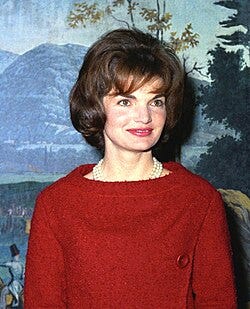
The Kennedys wasted no time making changes. In 1962, Jacqueline Kennedy gave a television tour of the White House seen by 56 million people (above). Like Folsom, she was eager to open the place to pubic view. She showed how, in a short time, she had directed the restoration and redecoration of the residence, establishing herself as both historian and art historian. She spearheaded efforts to bring top artists to the White House and set a tone for Washington, D.C., that has never been equaled (and, regrettably, recently, cheapened). Then, as a widow living in New York City, she led a campaign to save and renovate Grand Central Station. She had a 20-year career in publishing and was an editor at Viking Press and Doubleday.
During their White House years, her husband was well aware of her celebrity. He famously recognized it during their 1961 visit to France. “I do not think it altogether inappropriate to introduce myself to this audience,” Kennedy said. “I am the man who accompanied Jacqueline Kennedy to Paris, and I have enjoyed it.”
Picture-perfect, the First Lady wore marvelous clothes. Oleg Cassini was her personal couturier at the White House; she also wore Valentino, Chanel, Givenchy, and clothes by other prestigious names. It had been a while since a First Lady was also a fashion icon. Francis Folsom comes to mind. Vast stretches of America had never heard of the designers Kennedy patronized or had seen anybody wearing their creations, which now popped up on front pages, not in what papers used to call the “society” section.
Jacqueline Kennedy had substance as well as style. She spoke French, Spanish, Italian, and German, adding diplomatic luster to the traditional, domestic image of the First Lady cultivated by Mamie Eisenhower and Bess Truman. She was a hit wherever she went
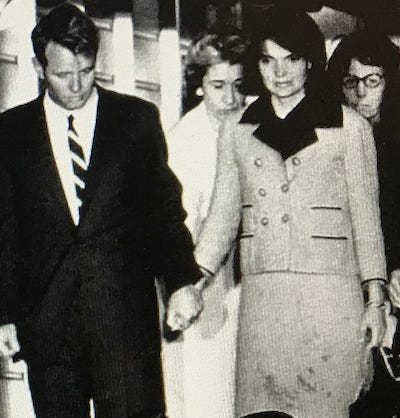
Kennedy also knew what was expected of her. Anyone alive at the time remembers her appearance on November 22, 1963, when Air Force One, bearing the body of John F. Kennedy, landed at Andrews Air Force Base. She stood in the doorway in a pink Chanel suit, the skirt splattered with her husband’s blood. “Let them see what they have done,” she is reported to have said (the suit is preserved in the National Archives). A few days later, standing next to her, the young John Kennedy, Jr., saluted the cortege as it passed. That iconic image was revived for a new generation when he, his wife, and her sister died in a plane crash in 1999; Kennedy was flying the plane.
Jacqueline Kennedy died of lymphoma in 1994, age 64. She was buried in Arlington National Cemetery, next to her husband. He and Taft are the only Presidents interred at Arlington, and their wives are the only First Ladies buried there.
Kennedy’s looms large in public awareness because, like Francis Folsom, she outlived her husband by decades. Both women remarried. Kennedy’s marriage to Aristotle Onassis in 1968 disappointed many. It was seen as her attempt to acquire protection and security and as his attempt to boost his social standing. They remained married, unhappily, until his death in 1975. Her competition for his attention was Maria Callas, the most celebrated opera diva of the decade (Piccotti).
Kennedy had negotiated a settlement with Onassis and waived her claims to his vast estate, taking instead some $26 million, said to be less than what she expected (she and his daughter Christina Onassis fought over the terms of his will). In later years, Kennedy, by any measure a very wealthy woman, was escorted around Manhattan by Maurice Tempelsman, a diamond dealer; they did not marry.
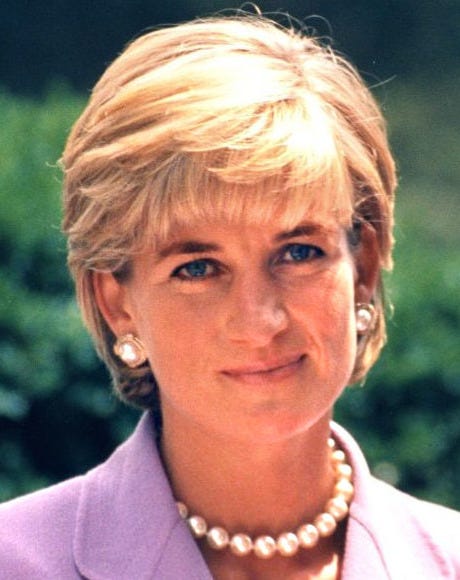
Lady Diana Spenser (1961-97) is another woman who outshone her famous husband. She married Prince Charles in 1981, a ceremony said to have been watched by a billion people. Most grooms are outshone by most brides, but few brides have made grander entrances than Diana. Her slow advance up the aisle of St. Paul’s Cathedral, with her 25-foot train and 40-foot veil (which was dotted with 10,000 micro-pearls and mother-of-pearl sequins), made for marvelous television
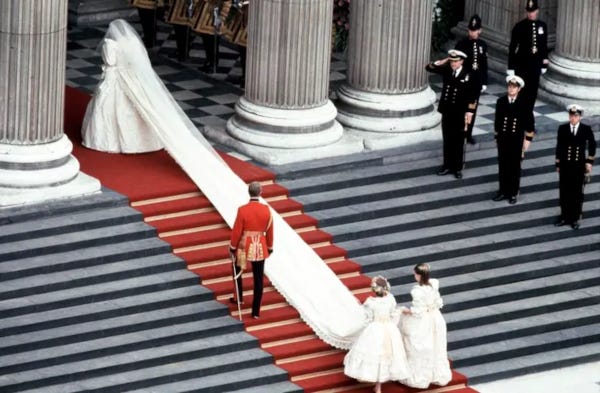
There was no happy ending. She and Charles divorced in 1991. Diana went on of make significant achievements on national and world stages. Her humanitarian causes included a campaign against landmines and another to destigmatize HIV and AIDS. Like Jacqueline Kennedy, she was a sensation wherever she set foot.
At age 36, Diana died in a car accident in Paris in August 1997, along with her lover, Emad El-Din Mohamed Abdel Mena’em Al Fayad, known as Dodi. Her funeral was seen by over twice the number of people that saw her wedding. She was no longer Her Royal Highness, but the pageantry and size of her funeral compare favorably Queen Elizabeth’s state funeral in 2022, which is ranked as the largest in broadcast history.
The worldwide audience for the queen’s funeral was 4.1 billion viewers. Diana’s funeral, held 25 years earlier, is estimated to have had around 2.5 billion viewers, and was the largest television event of its time. In the UK, Diana’s funeral had a larger television audience than the Queen’s. In the US, over 33 million watched her funeral, about three times the television audience that watched Queen Elizabeth’s funeral.
Like Marilyn Monroe, Elvis Presley, and Muhammad Ali, Diana was a global figure touched with tragedy. In various lists of the world’s great celebrities, Diana and Pope St. John Paul II stand out. Theirs are often the only names on the list who were neither sports figures nor entertainers.
When Cleveland and Folsom were in the White House, the role of First Lady had hardly taken shape. Even the designation was new. By Kennedy’s era it was well understood, with Eleanor Roosevelt, Bess Truman, and Mamie Eisenhower having established expectations for First Ladies to come.
Leading women have much to do with fashion. We can compare Mamie in her pink inaugural gown, seen in the painting below by Thomas Stevens (1953), to Jackie in pink, seen at a reception in Paris just twelve years later. The great revolutions of the 1960s—civil rights, the Stonewall riots—were still to come, but these photographs show how much had already changed. It might, especially these days, be objected that women like Folsom, Kennedy, and the Princess were decorative and that their clothes did little more than reinforce the image of their husbands’ power and wealth, as if the women’s clothes were really about the men.
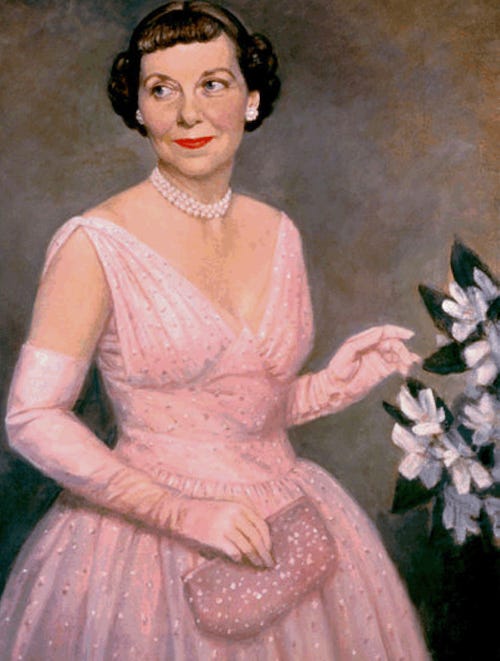
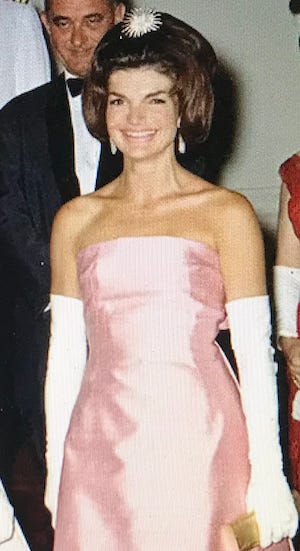
Such a suggestion underrates the power of clothes to speak. These women chose their clothes. They knew what they were dong. Prominent women who married politicians know that they themselves send messages.
Folsom and the Princess had a gift for communicating with people. Both were young, beautiful, and marrying someone important. Kennedy’s history was different.
A striking First Lady, she was suddenly a young widow with two little children. Before her husband’s death, she lost a premature son, Patrick. Loss and grief helped Jacqueline Kennedy step over the barrier her background and education created. She reached everybody and probably moved more people than her husband was able to do in his short time as a focus of public attention.
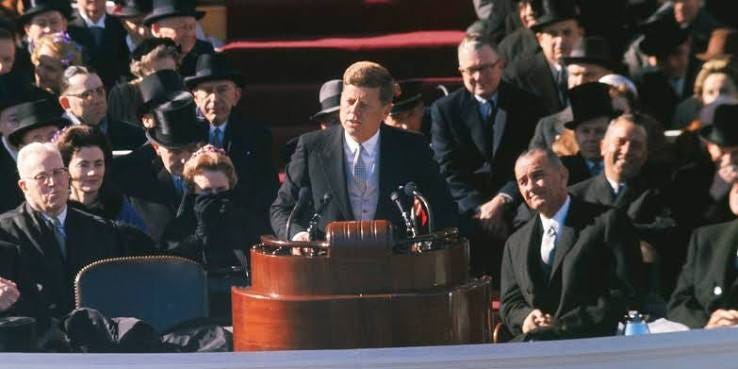
Among these three husbands, Kennedy stands out. His accent was distinctive (his dropped R’s especially) and many things about him were notable. One was his back, injured in a football game at Harvard and made worse during his Navy experience (he had four back operations). Another was his inaugural address. It was a cold day (22 degrees) and windy (what we now call wind chill would then have been about 7 degrees). He spoke forcefully and persuasively and introduced two memorable phrases: “The torch has been passed to a new generation” and “Ask not what your country can do for you. Ask what you can do for your country.” There were no words with comparable staying power from Charles or from Cleveland.
Of the charismatic queens, Diana dominates. She faced more opposition than either Folsom or Kennedy. The Americans bucked trends, but Diana had the formidable House of Windsor and the vast machinery of Buckingham Palace to overcome. She did it outside the royal grounds. For example, on an official visit to Australia she took Prince William, only nine month old, with her, sending the messages that she was more mother than princess. (It also raised eyebrows, since traditionally the Prince of Wales and his first son did not travel on the same plane, in case of an accident.) The Australia trip was apparently the first time Charles (clueless, it seems) realized that it was his wife who drew the crowds.
The irony is that Diana did not want the attention. Like Kennedy and Folsom, she knew her place, which was behind, albeit just barely behind, her husband. She objected to the media attention that ultimately contributed to her death.
When she died, Diana was no longer HRH. According to protocol, the flag at Buckingham Palace would not have been lowered for her. But Prime Minister Tony Blair urged Queen Elizabeth to make an exception. When the Queen left the palace to go to Diana’s funeral, the flag was lowered. The huge crowd of onlookers applauded—not the Queen, I think, but the gesture that deferred to Diana. When news of her death reached England, she was memorably called “the people’s princess” by one of her greatest admirers, Blair himself.
July 2026
Sources
Brown, Tina. Palace Papers: Inside the House of Windsor—The Truth and the Turmoil. New York: Crown Publishers, 2023.
Burack, Emily. “Prince Philip Did Not Want the Flag Lowered Over Buckingham Palace for Princess Diana.” Town & Country. April 27, 2022. https://www.townandcountrymag.com/ society/tradition/a39840693/prince-philip-princess-diana-funeral-flag-quotes/ Seen July 13, 2026.
Piccotti, Tyler. “The Love Triangle Between [sic] Maria Callas, Aristotle Onassis, and Jackie Kennedy.” Biography 41.8. Dec. 11, 2024.
Prioli, Carmine. “The Second Sinking of the ‘Maine.’” American Heritage 41. December 1990.
Senik, Troy. A Man of Iron: The Turbulent Life and Improbable Presidency of Grover Cleveland. New York: Simon and Schuster, 2022.
Wills, Matthew. “Jackie’s French Connection.” Daily JStor. https://daily.jstor.org/jackies-french-connection/ March 12, 2023. Seen July 10, 2026.
Very enjoyable read Allen. Many thanks. I remember Jackie. I was young but I was very aware of her. Both she and JFK were remarkable. I had never heard of Folsom so that was new and she sounds like quite a woman.